 info@masontec.ie

Introduction to Gas Chromatography for New and Advanced Users
What is Gas Chromatography?
Gas chromatography (GC) is common analytical technique applicable to gas, liquid, and solid samples (components that are vaporized by heat). If a mixture of compounds is analysed using GC system, each compound can be separated and quantified.
When a sample solution is injected into the GC system, the compounds contained in the sample, including the solvent component(s), are heated at a very high temperature and immediately vaporized within the sample injection unit.
Subsequently, after evaporation, the compounds move through the GC column using carrier gas as the mobile phase. It is important to understand that, in GC, the mobile phase you are using is not liquid, like we are used to in Liquid Chromatography, but it is a gas (Helium, Nitrogen, or Hydrogen). The carrier gas consistently flows from the sample injection unit to the column, and then to the detector. Thus, the components which were vaporized in the sample injection unit are transported by the carrier gas to the column. Once the components are in the column, the mixture of compounds is separated into the individual components, and the amount of each compound is then measured by the detector individually as they elute.
Finally, the detector converts the amount of each compound into an electrical signal and sends these signals to a data processing unit. Consequently, the data obtained allows us to determine the compounds contained in the sample and calculate amounts if standards were also injected.
Refer to Figure 1. below for a generic overview of a GC instrument
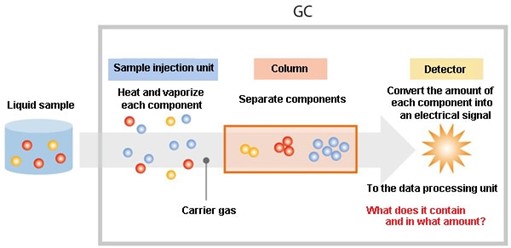
Figure 1. Generic overview of GC instrument
Gas Chromatography Seperation
Separation using GC only occurs within the column. The sample containing multiple compounds is injected into the column together with the carrier gas, as we discussed above. Both, the sample and the carrier gas travel through the column, but the rate of progression within the column is unique to each compound. Accordingly, differences arise in the times at which the respective compounds arrive at the column outlet. As a result, a separation between each compound occurs. Refer to Figure 2 below for generic overview of separation.
The components passing through the column are transported by the carrier gas while being separated from each other and adsorbed into the stationary phase.

Figure 2. Principals of separation on GC column
A typical chromatogram is shown in Figure 3. The horizontal axis represents the time until the component reaches the detector. The vertical axis shows the signal intensity. The part at which nothing is detected is called the baseline, and the part where a component is detected is called a peak. The time from when the sample is injected into the system until the peaks appear is called the retention time. As the elution times for each component differ, each component can be separated and detected.

Figure 3. GC – typical chromatogram overview
Compounds Suitable for GC Analysis
Not all chemicals/compounds are prone to gas chromatography analysis. Components that can be analysed with GC have the following three main features:
- Compounds with a boiling point up to 400 °C
- Thermally stable compounds – compounds which will NOT decomposed at their vaporization temperature
- Compounds that decompose at their vaporization temperature, but always by the same amount – pyrolysis GC
Compounds Not Suitable for GC Analysis
According to the above you can understand that certain compounds can’t be analysed using GC technique. See below for compounds not suitable for GC:
- Compounds which can’t vaporize – inorganic metals, ions, and salts
- Highly reactive compounds and chemically unstable compounds – hydrofluoric acid and other strong acids, ozone, NOx and other highly reactive compounds
- Thermally unstable compounds – chemicals which will break at higher temperatures
However, you can always try the GC technique with other difficult compounds:
- Highly adsorptive compounds – containing carboxyl group, hydroxyl group, amino group, or sulfur
- Compounds for which standard samples are difficult to obtain – qualitative and quantitative analyses are difficult
Gas Chromatography – Master the Basics
This first GC blog briefly introduced you to gas chromatography technique, separation basics and I hope helped you to understand that some compounds can not be analysed using gas chromatography.
Should you wish to discuss the GC technique and available GC instruments portfolio, please do not hesitate to contact me directly.

RECENT POST
-
Vacuum Pump Specifications Explained: What Do the Key T...
Oct 01, 2026
Blog -
Mason Technology Appointed to Multiple Lots on NI Water...
Sep 21, 2026
News -
Oil-Sealed vs Dry Vacuum Pumps: Which Is Right for Your...
Sep 03, 2026
Blog -
Fast, Reliable Water Content Determination with EVA Kar...
Aug 31, 2026
Blog -
How to Choose the Right Vacuum Pump for Your Laboratory...
Aug 06, 2026
Blog -
Mason Technology Appointed Official Proteintech Distrib...
Aug 06, 2026
News -
Replacing Tap Water Cooling with Recirculating Chillers
Aug 05, 2026
Blog -
Mason Technology Appointed Irish Partner for Analytik J...
Jun 24, 2026
News