 info@masontec.ie

How to Choose the Right Vacuum Pump for Your Laboratory or Industrial Application
One of the most common questions I’m asked is, “Which vacuum pump do I need?” The answer is rarely straightforward because every application has different operating requirements. A vacuum pump that performs exceptionally well in one process may be entirely unsuitable for another.
Selecting a vacuum pump isn’t simply a matter of choosing the largest or most powerful model available. The right pump depends on your application, the level of vacuum required and the conditions it will operate under. Choosing the wrong pump can lead to poor performance, increased maintenance and higher operating costs.
Whether you’re purchasing your first vacuum pump, replacing an existing system or upgrading ageing equipment, understanding a few key principles will help you make a more informed decision.
What Does a Vacuum Pump Do?
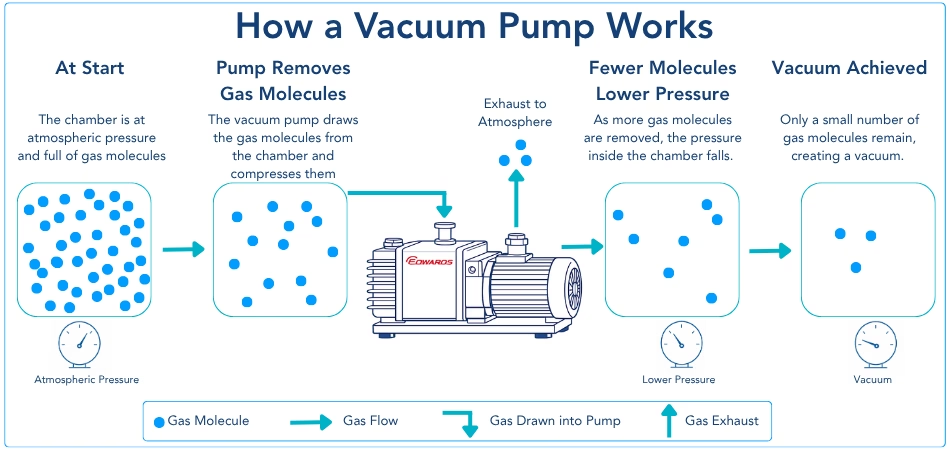
A vacuum pump removes gas molecules from a sealed system, reducing the pressure inside until the required level of vacuum is achieved. Put simply, the fewer gas molecules that remain within a vessel, the lower the pressure becomes.
This controlled vacuum is essential for a wide range of laboratory and industrial processes where removing air or other gases improves efficiency, product quality or process reliability.
Vacuum pumps are used in applications including:
- Rotary evaporation
- Vacuum filtration
- Freeze drying (lyophilisation)
- Vacuum ovens
- Mass spectrometry
- Electron microscopy
- Pharmaceutical manufacturing
- Chemical processing
- Food and beverage production
- Research and development laboratories
Every application has different requirements, which is why selecting the right vacuum pump is so important.
Five Questions I Ask Before Recommending a Vacuum Pump
When discussing a new application with a customer, I rarely start by looking at pump specifications. Instead, I begin by understanding the process. The answers to these five questions usually determine which vacuum technology is most suitable.
Not every application requires an ultra-high vacuum. Selecting a pump capable of producing a much deeper vacuum than necessary can increase costs without providing any operational benefit.
Understanding the operating pressure your process requires is the first step in selecting the right vacuum pump.
This is one of the most commonly overlooked considerations.
Applications involving solvents, corrosive chemicals or moisture may require different pump technologies or additional accessories to protect the pump and maintain reliable performance.
Understanding what the pump will be exposed to helps identify the most appropriate solution.
A vacuum pump running around the clock has very different requirements from one used occasionally in a research laboratory.
Duty cycle has a significant impact on equipment selection, servicing requirements and long-term operating costs.
For many pharmaceutical, analytical and life science applications, preventing contamination is essential.
The process itself may determine whether an oil-sealed or dry vacuum pump is the better choice. This is a topic we’ll explore in more detail in a future article.
Every vacuum pump requires maintenance, but the type and frequency varies depending on the technology and application.
Considering maintenance requirements at the selection stage can significantly reduce lifetime operating costs and improve equipment reliability.
Common Mistakes When Selecting a Vacuum Pump
Over the years, I’ve seen a few common mistakes repeated across different industries.

Choosing Based on Purchase Price Alone
The lowest purchase price doesn’t always represent the lowest cost over the life of the equipment. Energy consumption, maintenance requirements and downtime can all have a much greater financial impact.

Buying More Performance Than You Need
Selecting a larger or more powerful pump than the application requires can increase both capital and operating costs without improving process performance.

Overlooking the Process Environment
Factors such as solvents, moisture, corrosive gases and continuous operation should all influence pump selection.
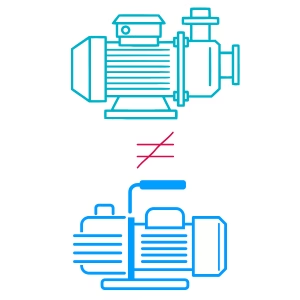
Assuming Every Vacuum Pump Is the Same
Different vacuum technologies are designed for different applications. Choosing the right technology is just as important as selecting the right size.
Think Beyond the Purchase Price
When comparing vacuum pumps, it’s important to look beyond the initial purchase price.
A well-specified vacuum pump should provide years of reliable operation with predictable maintenance requirements and efficient energy consumption. Selecting the right pump at the beginning often reduces total cost of ownership by avoiding unnecessary servicing, premature replacement and unexpected downtime.
As you compare different options, you’ll also come across technical terms such as vacuum level, pumping speed, pump-down time and ultimate vacuum. Understanding what these specifications mean is an important part of selecting the right pump, and we’ll explain each of them in a future article in this series.
Final Thoughts
Choosing a vacuum pump isn’t about finding the most powerful model available. Instead, it’s about selecting the technology that’s best suited to your application.
Taking time to understand your process, operating conditions and long-term requirements will help improve reliability, reduce maintenance and achieve better overall performance.
In the coming articles, we’ll take a closer look at vacuum pump technologies, explain key vacuum specifications and share practical advice on maintaining vacuum systems for long-term reliability.
If you’re reviewing an existing vacuum system or planning a new installation, Mason Technology can help identify the most suitable Edwards vacuum solution for your application.
Need advice on selecting the right vacuum pump? Contact Mason Technology to discuss your application with one of our vacuum specialists.
Continue the Vacuum Pump Series
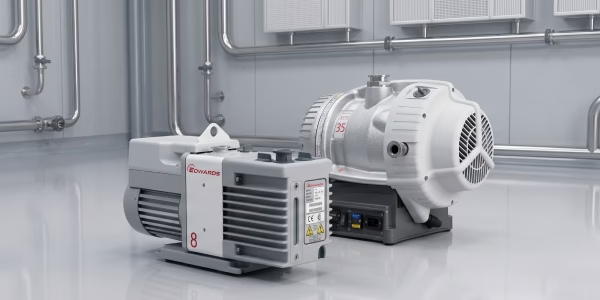
Oil-Sealed vs Dry Vacuum Pumps: Which Is Right for Your Application?
Compare oil-sealed and dry vacuum pumps, their advantages and key considerations, and learn which technology is best suited to your application.
Vacuum Pump Specifications Explained: What Do the Key Terms Mean?
Understand the 4 critical vacuum pump specifications: vacuum level, pumping speed, pump-down time and ultimate vacuum and how to size for your entire system.

RECENT POST
-
Vacuum Pump Specifications Explained: What Do the Key T...
Oct 01, 2026
Blog -
Mason Technology Appointed to Multiple Lots on NI Water...
Sep 21, 2026
News -
Oil-Sealed vs Dry Vacuum Pumps: Which Is Right for Your...
Sep 03, 2026
Blog -
Fast, Reliable Water Content Determination with EVA Kar...
Aug 31, 2026
Blog -
How to Choose the Right Vacuum Pump for Your Laboratory...
Aug 06, 2026
Blog -
Mason Technology Appointed Official Proteintech Distrib...
Aug 06, 2026
News -
Replacing Tap Water Cooling with Recirculating Chillers
Aug 05, 2026
Blog -
Mason Technology Appointed Irish Partner for Analytik J...
Jun 24, 2026
News