 info@masontec.ie


Mechanical Testing of Plastics: Evaluating Strength, Flexibility and Product Performance
Plastics are used across a wide range of applications, from flexible packaging and medical devices to automotive components and industrial products. While these materials offer versatility in design and manufacturing, their mechanical properties must meet the demands of their intended application.
A plastic film may need to resist puncturing during handling, while a moulded component may require sufficient strength to withstand repeated forces without cracking or permanently deforming. Even where materials appear identical, differences in formulation, processing conditions or raw material composition can influence their physical performance.
Mechanical testing helps manufacturers understand how plastics respond to applied forces, assess product suitability and maintain consistent quality.
By measuring properties such as tensile strength, flexibility, compression resistance and puncture strength, manufacturers can make more informed decisions during material development, production and quality control.
Why Is Mechanical Testing Important in Plastics Manufacturing?
The mechanical behaviour of a polymer influences how a finished product performs during handling, assembly and use.
Factors such as polymer type, additives, fillers, processing conditions and material ageing can affect strength, flexibility and resistance to deformation. Changes between production batches or raw material suppliers may also introduce variations that are not immediately apparent through visual inspection.
Mechanical testing provides objective measurements that help manufacturers:
- Assess whether materials meet defined performance requirements.
- Compare different polymer formulations and material suppliers.
- Evaluate the effects of manufacturing processes on finished products.
- Identify variations between production batches.
- Support the development of new materials and product designs.
The appropriate testing method depends on the material, its intended use and the forces it is likely to experience.
Key Mechanical Testing Methods for Plastics
Different tests reveal different aspects of polymer performance. While some assess how materials respond to stretching or bending, others examine resistance to compression, puncture or surface interactions.
Tensile Testing: Strength and Elongation
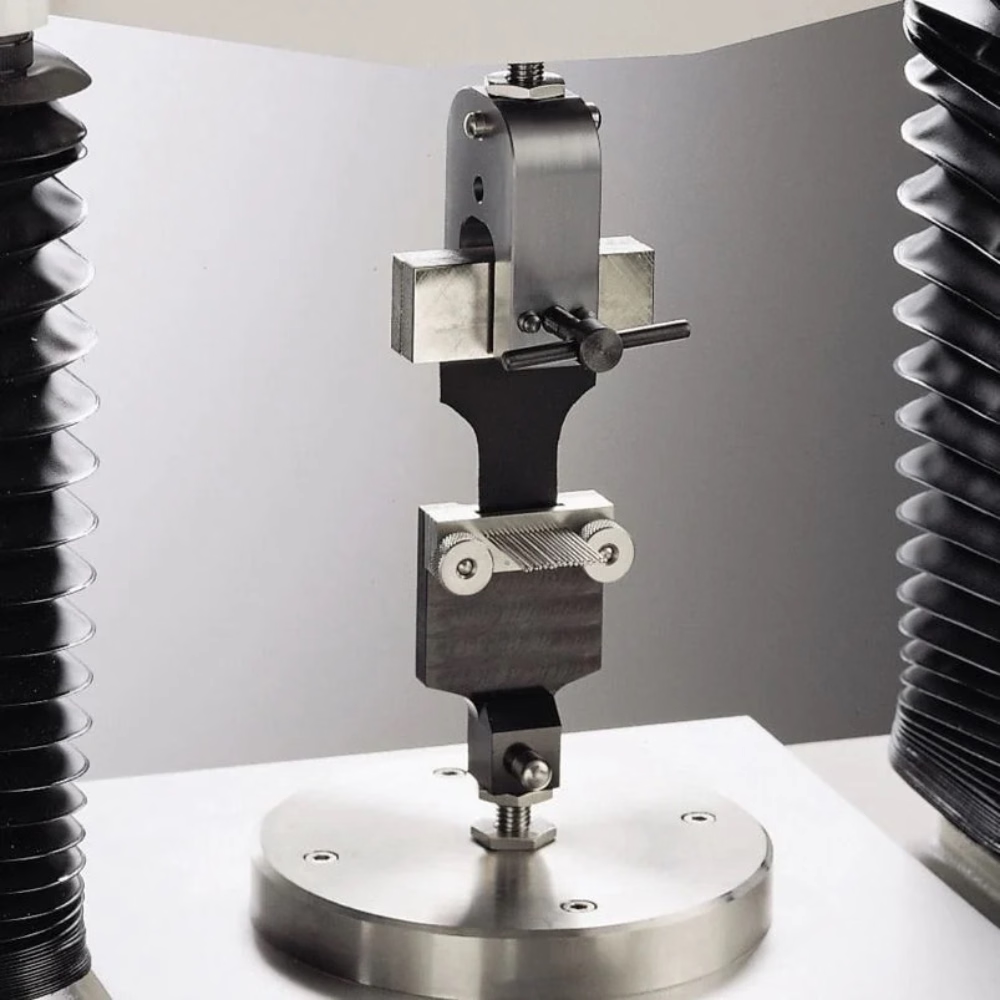
Tensile testing measures how a material responds when subjected to a pulling force.
It can be used to determine tensile strength, elongation and how a polymer behaves as it stretches towards its breaking point.
This is particularly relevant for plastic films, flexible materials and components that experience tension during handling or use.
For example, manufacturers can compare the tensile properties of different film formulations to understand how changes in material composition affect strength and flexibility.
Consistent testing also helps identify variations between material batches and establish acceptable performance limits.
Compression Testing: Resistance to Deformation
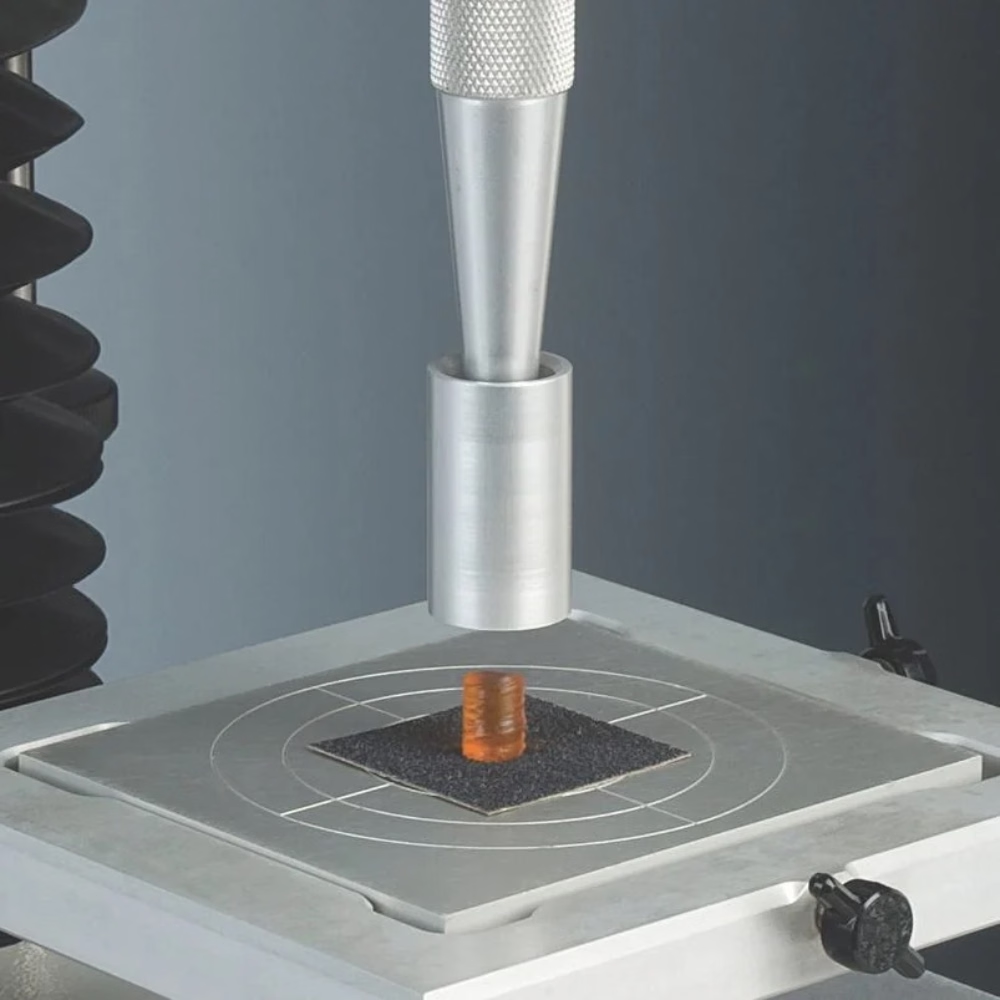
Compression testing measures how a material responds when pressure is applied.
Depending on the test method and material, it can provide information about compressive strength, stiffness and the ability to recover after deformation.
These properties are important for products such as polymer foams, flexible components and moulded plastic products that must withstand compressive forces.
Testing can help manufacturers determine whether materials retain their intended properties when compressed and compare how different formulations behave under similar conditions.
Flexural Testing: Bending Strength and Stiffness
Not all plastic components are designed to remain rigid. Some must flex repeatedly, while others need sufficient stiffness to maintain their shape under load.
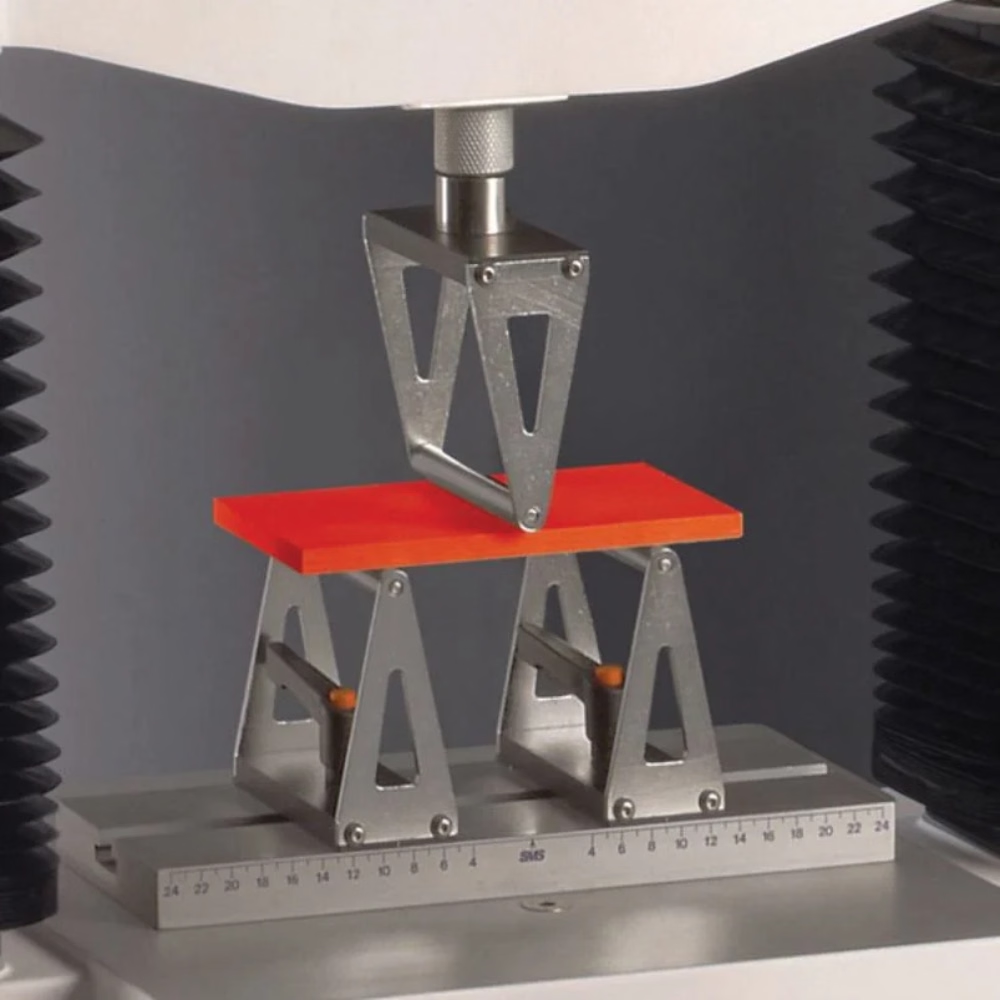
Flexural testing examines how a material responds to bending forces.
Using methods such as three-point bend testing, manufacturers can evaluate flexural properties and compare the stiffness or bending resistance of different materials.
This is particularly useful in the development and evaluation of moulded plastic components, polymer sheets and other products where resistance to bending is important.
Puncture and Tear Resistance: Performance of Plastic Films
For flexible packaging, thin films and protective materials, resistance to puncturing and tearing can be critical to product performance.
Puncture testing measures the force required to penetrate a material, while tear testing examines its resistance to the initiation or propagation of a tear.
These techniques can help manufacturers evaluate the durability of films, compare material formulations and assess the effects of changes in film thickness or processing conditions.
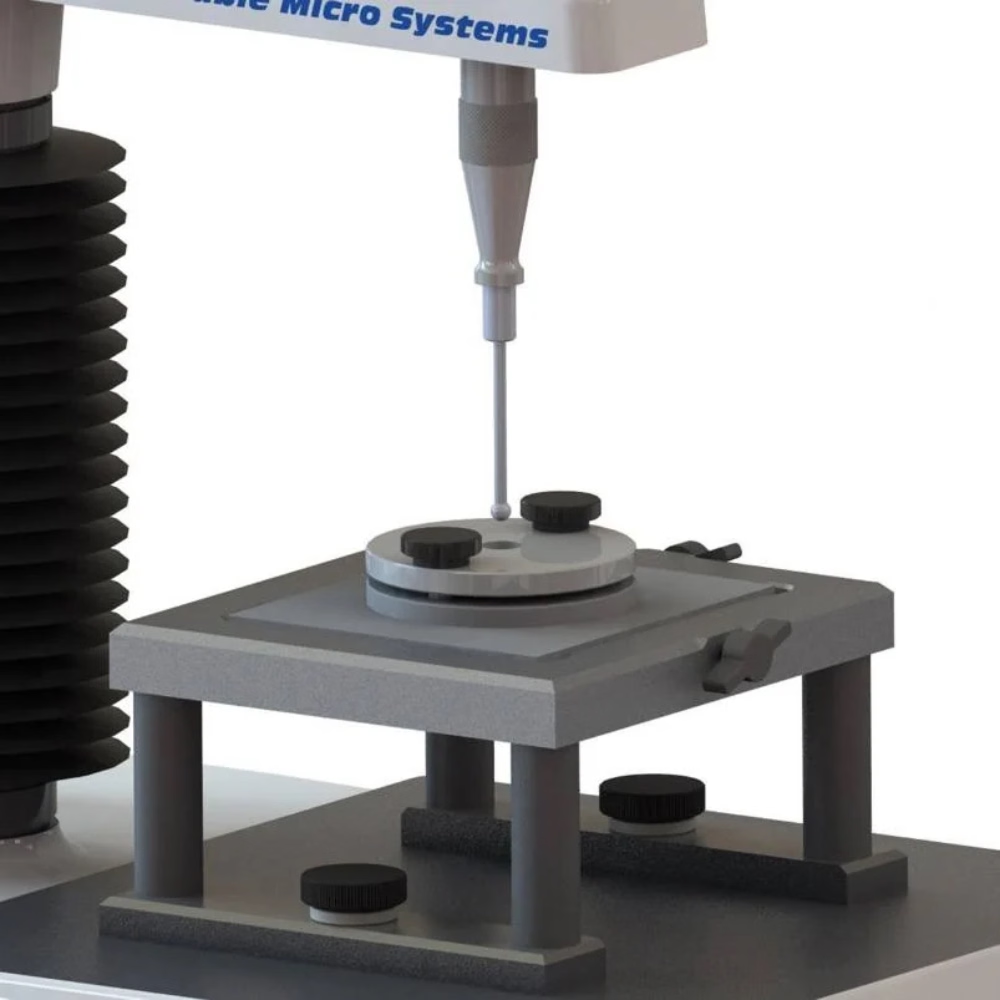
For example, a film support rig can be used to assess the puncture resistance of a polymer film under controlled conditions.
The resulting measurements can support material selection and quality control for applications where product integrity is important.
Peel Strength, Adhesion and Friction
The performance of a plastic product is not determined solely by its strength or flexibility.
Surface interactions can also influence how materials perform, particularly in applications involving adhesive layers, coatings, films and packaging.
Peel testing measures the force needed to separate bonded materials, helping manufacturers evaluate adhesive performance.
Friction testing assesses the resistance encountered when one surface moves against another. This can be relevant where plastic films or components must slide, feed or move consistently during processing and handling.
Understanding these properties can help manufacturers identify potential performance issues and assess whether materials meet application-specific requirements.
Tensile Test
Compression Testing
Flexure / Three Point Bend Test
Film Support Rig
Understanding How Polymers Behave Over Time
Some polymers exhibit time-dependent mechanical behaviour, meaning their response to an applied force can change over time.
Two important properties are creep and stress relaxation.
Creep describes how a material continues to deform while subjected to a constant load. Stress relaxation describes how the stress within a material decreases when it is held at a fixed deformation.
These behaviours can be particularly relevant for products that remain under tension or compression during use.
By incorporating controlled holding periods or repeated loading cycles into mechanical tests, manufacturers can gain further insight into material behaviour beyond a single measurement of maximum force.
Supporting Material Development and Quality Control
Mechanical testing is valuable not only for evaluating finished products but also during the development and optimisation of polymer materials.
Evaluating New and Recycled Materials
As manufacturers explore recycled polymers, bio-based alternatives and new material formulations, understanding mechanical performance becomes increasingly important.
A material may offer advantages in terms of recycled content or material sourcing, but it must still meet the functional requirements of the finished product.
Mechanical testing enables manufacturers to compare the properties of alternative materials and evaluate the effects of changes in formulation or processing.
Maintaining Consistency Between Production Batches
Establishing reference measurements for approved materials or finished products provides a basis for routine quality control.
Subsequent production samples can be tested using consistent methods and compared against defined performance criteria.
This helps manufacturers identify deviations, investigate potential causes and make informed decisions before products are released.
Mechanical Testing with Stable Micro Systems
Selecting the appropriate testing equipment is important for obtaining meaningful and repeatable results.
Stable Micro Systems provides a range of Texture Analysers and materials testing solutions that can be configured to measure the mechanical properties of polymers and finished plastic products.
Although commonly associated with texture measurement, these instruments can also be used for mechanical testing applications involving tensile, compression, flexural, puncture, adhesion and friction measurements.
A wide selection of probes and attachments allows testing to be adapted to different materials and applications. These include tensile grips, compression fixtures, three-point bend rigs and film support attachments.
The company’s Exponent Connect software also provides access to polymer testing methods, including methods associated with ASTM and ISO standards. Where formal standards testing is required, the appropriate instrument configuration, fixtures and test procedure must be selected.
Through its partnership with Stable Micro Systems, Mason Technology supports manufacturers and research laboratories in Ireland with equipment for evaluating material properties and product performance.
Explore the Stable Micro Systems TA.XTplusC Texture Analyser and the wider range of texture analysis solutions available through Mason Technology.
A More Complete Approach to Plastics Quality
Mechanical testing is an important part of understanding how plastics will perform in their intended applications.
By measuring properties such as strength, flexibility, compression resistance and puncture performance, manufacturers can evaluate material suitability, monitor production consistency and support the development of reliable products.
Alongside other analytical techniques that assess polymer composition, thermal behaviour and moisture content, mechanical testing contributes to a more complete understanding of material quality.
For manufacturers seeking to introduce or improve mechanical testing within their operations, Mason Technology can help identify appropriate testing equipment and methods for specific materials and applications.
Contact our team to discuss your polymer and plastics testing requirements.

RECENT POST
-
Mechanical Testing of Plastics: Evaluating Strength, Fl...
Nov 20, 2026
Blog -
Webinar: Purifying Peptides and Proteins with Flash and...
Nov 20, 2026
Webinars -
Smarter Laboratory Workflows: Taking a Practical Approa...
Nov 19, 2026
News -
Polymer Testing: Key Methods for Consistent Plastics Qu...
Nov 19, 2026
Blog -
How to Improve Colour Consistency in Plastics Manufactu...
Nov 09, 2026
Blog -
From Measurement to Data Integrity: Supporting Confiden...
Nov 09, 2026
News -
Mason Technology Sponsors Sustainability Initiative of ...
Nov 06, 2026
News -
Mason Technology Appointed BMG LABTECH Agent in Ireland
Nov 03, 2026
News