 info@masontec.ie


Six Common Vacuum Pump Problems and How to Prevent Them
Vacuum pumps are generally extremely reliable when correctly specified and maintained. However, many of the service issues we encounter are preventable.
Whether you’re operating a vacuum pump in a laboratory, pharmaceutical manufacturing facility or industrial environment, recognising the early warning signs of a problem can help reduce downtime, extend equipment life and avoid unexpected repair costs.
In the previous articles in this series, I’ve looked at how to choose the right vacuum pump, the differences between oil-sealed and dry technologies, and the key specifications that determine pump performance.
But even a correctly specified pump can develop problems over time, particularly when operating conditions change or routine maintenance is overlooked.
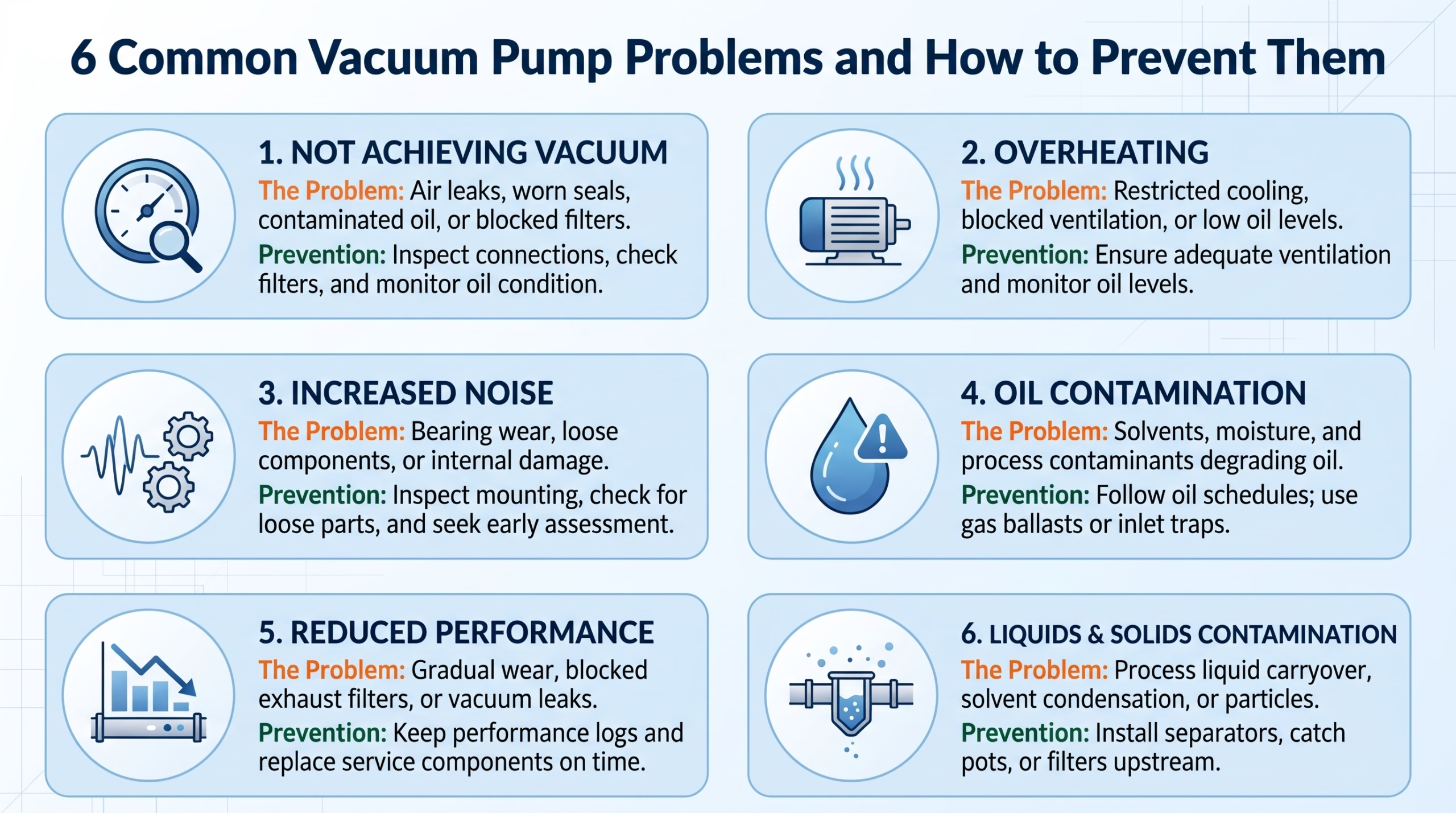
Here are six common vacuum pump problems, their potential causes and some practical steps to help prevent them.
1. The Pump Is Not Achieving the Required Vacuum
One of the most common issues we encounter is a vacuum system that is no longer reaching its required operating pressure.
It’s easy to assume the pump itself is at fault, but the problem may be elsewhere in the vacuum system.
Possible causes include:
- Air leaks in pipework, flanges, gaskets or valve seats
- Worn seals
- Contaminated oil in oil-sealed pumps
- Blocked or restricted filters
- Excessive process gas load
- Incorrect pump selection
How to prevent it
Start by checking the entire vacuum system rather than focusing solely on the pump.
Inspect connections, seals and valves for potential leaks. Check filters and, where applicable, the condition of the pump oil.
It’s also important to consider whether the process itself has changed. An increase in gas or vapour load can prevent a pump from achieving the required pressure, even when it is operating correctly.
If the pump was incorrectly specified for the application, maintenance alone may not resolve the issue.
2. The Vacuum Pump Is Overheating
Vacuum pumps generate heat during normal operation, but excessive temperatures can indicate a problem that needs attention.
Ignoring overheating can accelerate component wear, affect performance and significantly reduce pump life.
Possible causes include:
- Restricted cooling
- Blocked ventilation
- High ambient temperatures
- Low oil levels in oil-sealed pumps
- Operation outside the pump’s specified duty or operating limits
How to prevent it
Ensure the pump has adequate ventilation and that cooling arrangements are operating correctly.
Regularly inspect ventilation openings, cooling fans and any associated cooling systems.
For oil-sealed pumps, monitor oil levels and condition in accordance with the manufacturer’s recommendations.
It’s also worth reviewing the operating environment. A pump installed in a confined space or exposed to elevated ambient temperatures may require additional consideration.
Where overheating persists, the operating conditions should be assessed before further use.
3. Increased Operating Noise
Every vacuum pump produces some level of noise during operation. However, a sudden change in sound, particularly unusual rattling, knocking or vibration, should not be ignored.
These changes can be early indicators of mechanical wear or developing internal problems.
Possible causes include:
- Bearing wear
- Loose components
- Internal mechanical damage
- Foreign material entering the pump
- Excessive vibration or installation-related issues
How to prevent it
Pay attention to changes in the pump’s normal operating sound.
Check accessible external mounting arrangements and connections as part of routine inspections, following the manufacturer’s safety procedures.
Where unusual noise develops, arrange for the pump to be assessed rather than allowing the condition to deteriorate.
Early investigation can often prevent more extensive damage and costly repairs.
4. Oil Contamination
For oil-sealed vacuum pumps, maintaining the correct oil condition is essential for reliable performance.
Oil provides lubrication, sealing and cooling within the pump. When it becomes contaminated, these functions can be compromised.
Solvents, moisture and other process contaminants can enter the pump and gradually degrade the oil, potentially reducing vacuum performance and increasing component wear.
Possible causes include:
- Solvent vapours entering the pump
- Moisture or water vapour condensing in the oil
- Process contamination
- Oil changes being carried out less frequently than required
- Operating conditions that are unsuitable for the pump or oil
How to prevent it
Follow the manufacturer’s recommended oil inspection and maintenance procedures, adjusting service intervals where process conditions require it.
Where appropriate, gas ballast operation, inlet traps or condensers may help manage vapour-related contamination.
The suitability of these measures depends on the pump technology and application.
Oil contamination is not simply a maintenance issue. It can also indicate that the pump is being exposed to process conditions that need to be better managed.
5. Reduced Pumping Performance Over Time
Vacuum pump performance can deteriorate gradually, making the problem less obvious than a sudden failure.
You might notice that the system takes longer to reach its target pressure or struggles to maintain the required vacuum under normal operating conditions.
Common causes include:
- Normal component wear
- Blocked exhaust filters
- Contaminated oil
- Vacuum leaks
- Poor preventative maintenance
- Changes in process conditions or gas load
How to prevent it
Routine servicing and performance monitoring are important.
Keeping a record of normal operating performance can make it easier to identify gradual changes before they become serious problems.
For example, an increase in pump-down time may indicate developing restrictions, leaks or deterioration in pump performance.
Preventative maintenance should include inspection and replacement of relevant service components at the intervals recommended for the pump and its operating conditions.
Identifying deterioration early can help prevent unexpected interruptions to laboratory or production activities.
6. Contamination from Liquids and Solids
Another important cause of vacuum pump problems is contamination entering the pump directly from the process.
Liquid carryover, solvent condensation and solid particles can damage internal components, restrict gas flow and affect vacuum performance.
Depending on the pump technology, significant liquid ingress can result in serious mechanical damage.
Common causes include:
- Process liquids entering the pump
- Solvent condensation within the pump
- Particulate carryover from the process
- Inadequate upstream protection
- Unexpected changes in process conditions
How to prevent it
Appropriate system design and protection are particularly important where liquids or solids may be present.
Depending on the application, preventative measures may include:
- Installing separators, knockout pots or suitable filters upstream of the pump
- Ensuring condensate drains are functioning correctly
- Following manufacturer-approved cleaning and flushing procedures
- Monitoring process conditions to prevent liquid slugs
- Reviewing the suitability of inlet protection for the specific process
These measures should be selected with the pump technology and process conditions in mind.
Preventing contamination from reaching the pump is generally preferable to dealing with the damage after it has occurred.
Prevention Is Better Than Repair
Many vacuum pump failures develop gradually rather than occurring without warning.
Changes in operating temperature, noise, pump-down time or achievable vacuum can all indicate that something requires attention.
Regular preventative maintenance, performance monitoring and timely replacement of service components can significantly improve equipment reliability while reducing the risk of unexpected downtime.
However, maintenance is only part of the picture.
A pump must also be correctly specified for the process and operated within its intended conditions.
Repeated failures may indicate an underlying issue with the vacuum system, process gas load, contamination or operating environment rather than the pump itself.
Taking a broader view of the system can help identify the root cause and prevent the same problem from recurring.
Final Thoughts
A correctly specified and well-maintained vacuum pump should provide many years of reliable service.
Recognising early warning signs, understanding their potential causes and taking preventative action can help extend equipment life and minimise costly interruptions.
If your vacuum system is showing signs of reduced performance, or you’re reviewing your preventative maintenance requirements, Mason Technology provides vacuum pump servicing, maintenance and technical support for customers throughout Ireland.
Our vacuum specialists can help assess operating conditions, investigate performance issues and identify appropriate maintenance or repair requirements.
Experiencing vacuum pump problems? Contact Mason Technology to discuss your servicing and maintenance requirements with our technical team.
Continue the Vacuum Pump Series
How to Choose the Right Vacuum Pump for Your Laboratory or Industrial Application
Learn how to choose the right vacuum pump for laboratory and industrial applications. Discover the key factors to consider before selecting a vacuum pump.
Oil-Sealed vs Dry Vacuum Pumps: Which Is Right for Your Application?
Compare oil-sealed and dry vacuum pumps, their advantages and key considerations, and learn which technology is best suited to your application.
Vacuum Pump Specifications Explained: What Do the Key Terms Mean?
Understand the 4 critical vacuum pump specifications: vacuum level, pumping speed, pump-down time and ultimate vacuum and how to size for your entire system.

RECENT POST
-
Mason Technology Appointed BMG LABTECH Agent in Ireland
Nov 03, 2026
News -
Sustainability in Pharma: Practical Improvements Across...
Nov 03, 2026
News -
Six Common Vacuum Pump Problems and How to Prevent Them
Nov 02, 2026
Blog -
Vacuum Pump Specifications Explained: What Do the Key T...
Oct 01, 2026
Blog -
Mason Technology Appointed to Multiple Lots on NI Water...
Sep 21, 2026
News -
Oil-Sealed vs Dry Vacuum Pumps: Which Is Right for Your...
Sep 03, 2026
Blog -
Fast, Reliable Water Content Determination with EVA Kar...
Aug 31, 2026
Blog -
How to Choose the Right Vacuum Pump for Your Laboratory...
Aug 06, 2026
Blog