 info@masontec.ie

Energy Efficient Laboratory Equipment
This article is part of our Sustainable Science in Practice series, which explores practical ways laboratories, production environments and controlled facilities can reduce environmental impact while maintaining accuracy, reliability and compliance. The series highlights supplier solutions, services and workflows that support more sustainable operation in real world settings.
Reducing Energy Consumption Without Compromising Performance
Energy efficient laboratory equipment plays an important role in reducing energy consumption in modern research facilities. Laboratories rely on equipment such as ultra-low temperature freezers, incubators, circulators and environmental monitoring systems that often operate continuously.
As a result, laboratory buildings can consume three to ten times more energy per square metre than typical office spaces, largely due to specialised equipment and strict environmental control requirements.
For laboratory managers and research scientists, improving energy efficiency is therefore not only a sustainability objective. It is also an operational priority. Lower energy consumption can reduce operating costs, improve equipment reliability and support institutional sustainability initiatives.
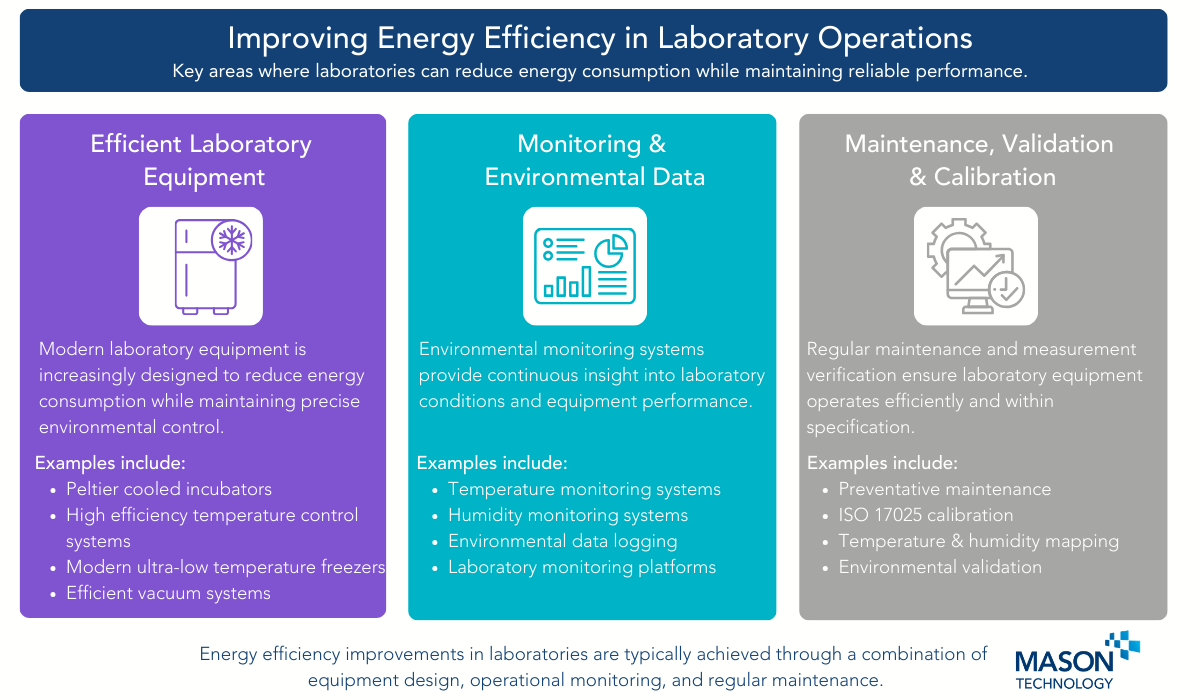
Sustainable laboratory operations typically combine efficient equipment, environmental monitoring and well-maintained infrastructure. When these elements work together, laboratories can reduce energy use while maintaining consistent experimental performance.
This article explores practical ways laboratories can improve energy efficiency through equipment selection, monitoring, preventative maintenance and accurate measurement practices.
Understanding Energy Use in Laboratories
Laboratories require substantial energy to maintain controlled environments. Temperature control systems, incubators, freezers and analytical equipment often run continuously. Over time, this constant operation contributes significantly to overall energy demand.
Understanding where energy is used within the laboratory environment is therefore the first step in improving efficiency. Establishing a baseline allows laboratory managers to identify inefficiencies and prioritise improvements.
In many cases, energy improvements come from a combination of approaches, including:
-
selecting energy efficient laboratory equipment
-
monitoring environmental and equipment performance
-
implementing preventative maintenance programmes
-
ensuring accurate measurement and calibration of instruments
Together, these practices support reliable laboratory performance while reducing unnecessary energy consumption.
Many research institutions now evaluate laboratory sustainability through structured programmes such as Green Lab certification initiatives, which encourage laboratories to assess energy use, equipment efficiency and operational practices.
Selecting Energy Efficient Laboratory Equipment
Modern laboratory equipment increasingly incorporates technologies designed to reduce energy consumption while maintaining precise environmental control.
Several categories of equipment can have a significant impact on laboratory energy use.
Peltier Cooling Technology
Traditional compressor-based cooling systems consume significant energy and generate additional heat that must be removed by laboratory HVAC systems.
Peltier-cooled incubators use thermoelectric elements to provide both heating and cooling within a single system. When an electrical current passes through the Peltier element, heat is transferred from one side of the device to the other. This allows one side to cool while the opposite side releases heat, enabling precise temperature control without the need for compressors or refrigerants.
In laboratory applications, this technology can provide stable temperature conditions with low vibration and quiet operation. Memmert’s Advanced Peltier Technology, used in systems such as the IPPeco cooled incubator and HPPeco climate chamber, can also significantly reduce energy consumption compared with compressor-cooled units, with reported savings of up to 90% depending on operating conditions.
Peltier technology is particularly efficient for applications operating close to ambient temperatures, where only small heating or cooling adjustments are required.
You can read more about this technology in our article on Memmert Peltier technology and energy efficient incubators
High Efficiency Temperature Control Systems
Temperature control systems used in research and production environments often operate continuously. As a result, inefficient systems can become significant contributors to laboratory energy consumption.
Modern process circulators and temperature control systems are increasingly designed to improve both performance and energy efficiency. Advances in refrigeration technology, heat transfer design and system control allow these systems to maintain precise temperature stability while reducing overall energy demand.
For example, the latest generation of process circulators such as Huber’s Unistat systems incorporate design improvements that enhance both efficiency and sustainability. These include reduced internal fluid volumes that enable faster heating and cooling, high-performance circulation pumps that improve heat transfer, and energy management features designed to minimise power and water consumption.
Some models also utilise natural refrigerants such as CO₂ (R-744), which has zero ozone depletion potential and a global warming potential of approximately 1, providing an environmentally responsible alternative to conventional synthetic refrigerants.
Together, these design improvements allow laboratories and production facilities to achieve precise temperature control while supporting more energy-efficient operation.
Further details are discussed in our post on Huber’s Unistat process circulators and sustainable temperature control
Energy Efficient Ultra-Low Temperature Freezers
Ultra-low temperature freezers are among the most energy intensive pieces of equipment in many laboratories because they operate continuously at extremely low temperatures.
A single ultra-low temperature freezer can consume a similar amount of electricity to an average household each year, depending on the model and operating conditions.
Modern freezer designs incorporate improved insulation, advanced compressor technologies and more efficient refrigeration systems. Laboratories implementing newer generation freezers from manufacturers such as Eppendorf and B Medical Systems can significantly improve energy efficiency while maintaining reliable sample storage conditions.
Efficient Vacuum Systems in Analytical Workflows
Vacuum systems are widely used in analytical laboratories for applications such as filtration, evaporation and sample preparation. Because these systems often operate for extended periods, inefficient vacuum pumps can contribute significantly to laboratory energy consumption.
Modern vacuum pump technologies are designed to improve energy efficiency while maintaining stable vacuum performance. Advanced pump designs can reduce both power consumption and cooling requirements, helping laboratories operate more efficiently.
Manufacturers such as Edwards have developed vacuum systems engineered to minimise energy use while maintaining the performance required for demanding analytical and research applications. Selecting efficient vacuum technology can therefore contribute to improved laboratory sustainability while supporting reliable experimental workflows.
Efficient Laboratory Water Purification Systems
Laboratory water purification systems are used extensively to produce high-purity water for analytical techniques, sample preparation and instrument feeds. Because these systems often operate continuously, their design can influence both resource consumption and laboratory sustainability.
Modern purification systems increasingly incorporate technologies that reduce environmental impact while maintaining reliable water quality. For example, the Solo™ S water purification system from Avidity Science introduces a reusable cartridge design that significantly reduces consumable waste.
The system forms part of the AvRecycle™ programme, which allows used cartridges to be returned, disassembled, cleaned and refilled for reuse. This approach can reduce plastic waste and associated carbon emissions from consumables by up to 90 percent compared with traditional single-use cartridge systems.
In addition to reducing consumable waste, the system uses reverse osmosis and deionisation purification technologies combined with mercury-free LED UV for bacterial control. Its design also incorporates features intended to reduce water and energy consumption during operation.
By selecting purification systems designed with resource efficiency in mind, laboratories can maintain the high water quality required for analytical and life science applications while supporting broader sustainability goals.
While selecting efficient equipment is an important step, improving laboratory energy performance also depends on how systems are monitored, maintained and validated over time.
Monitoring Laboratory Environments and Equipment Performance
Energy efficiency improvements are most effective when laboratories have clear visibility into environmental conditions and equipment performance.
Environmental monitoring systems provide continuous oversight of critical parameters such as temperature and humidity. These systems support regulatory compliance while also helping laboratories identify operational inefficiencies.
Monitoring solutions such as Dickson environmental monitoring systems and data loggers allow laboratories to track environmental conditions across multiple areas of a facility.
Continuous monitoring can help laboratories:
-
detect inefficient equipment operation
-
identify environmental instability that increases energy demand
-
maintain stable conditions without unnecessary heating or cooling
Data from monitoring systems therefore supports both compliance and operational optimisation.
The Role of Temperature and Humidity Mapping
Temperature and humidity mapping plays an important role in validating controlled environments used to store or process sensitive materials.
During a mapping study, calibrated sensors are placed at multiple locations throughout a defined space. These sensors measure temperature and humidity conditions over a specified period to create a detailed environmental profile.
Mapping studies are commonly used for environments such as:
-
laboratories
-
stability chambers
-
cold rooms and freezer rooms
-
warehouses and storage areas
-
fridges and freezers
The resulting data helps identify hot or cold zones and confirms that environmental conditions remain within required specifications.
In regulated industries such as pharmaceuticals and life sciences, mapping studies support compliance with quality and regulatory requirements. Comprehensive reports generated from mapping studies provide documented evidence that controlled environments perform as expected.
In addition to supporting compliance, mapping can highlight areas where environmental control systems may be working harder than necessary. Addressing these issues can improve both environmental stability and operational efficiency.
Maintaining Equipment Efficiency Through Preventative Maintenance
Laboratory equipment that is not properly maintained can gradually become less efficient. Over time, poorly maintained systems may consume more energy while delivering reduced performance.
Preventative maintenance programmes help ensure equipment continues to operate within manufacturer specifications and maintains optimal efficiency throughout its operational life.
Typical maintenance activities include:
-
inspection of critical components
-
verification of temperature stability
-
testing of refrigeration and heating systems
-
replacement of worn or degraded parts
Regular preventative maintenance therefore supports both operational reliability and long-term energy efficiency.
The Importance of Calibration for Sustainable Laboratory Operations
Accurate measurement is fundamental to efficient laboratory operations. Instruments operating outside calibration can lead to repeated experiments, unnecessary equipment use and wasted resources.
Calibration services help ensure laboratory instruments maintain reliable measurement performance. ISO 17025 accredited calibration services provide traceable verification of measurement accuracy.
When instruments operate within specification, laboratories can avoid inefficiencies caused by measurement errors or repeated work. Calibration therefore plays an important role in supporting sustainable laboratory operations.
Building a Sustainable Laboratory Through Integrated Practices
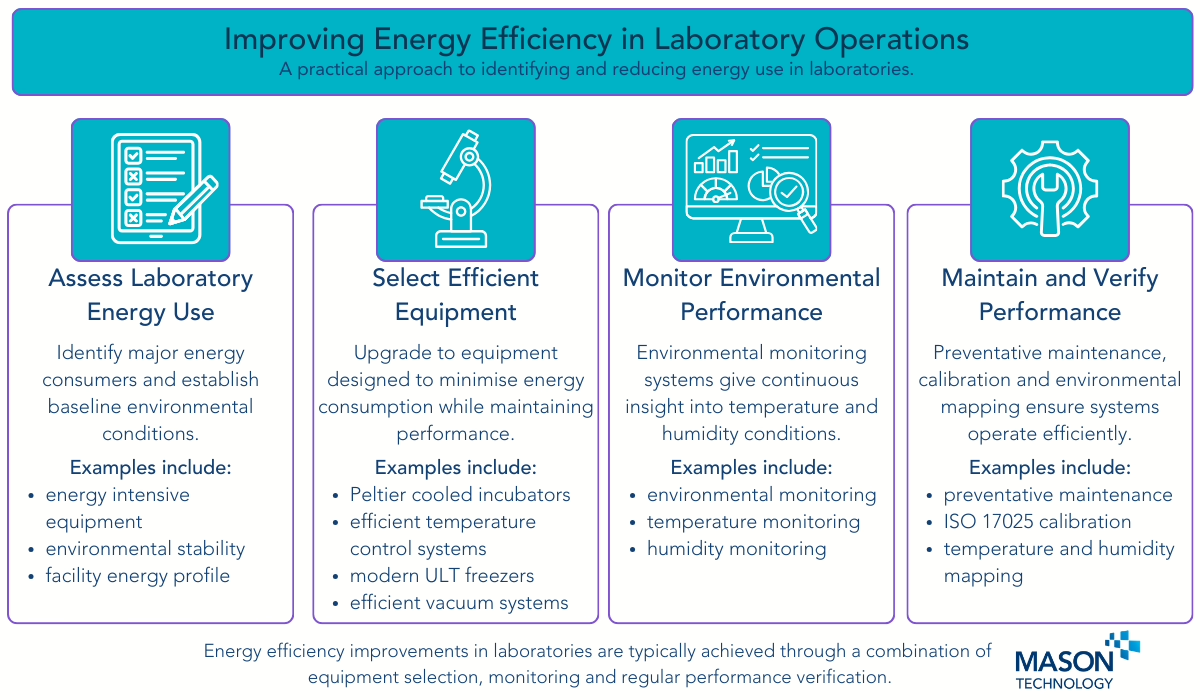
Improving laboratory energy efficiency rarely depends on a single solution. Meaningful improvements usually result from combining several complementary practices.
These practices may include:
-
selecting energy efficient laboratory equipment
-
implementing environmental monitoring systems
-
conducting temperature and humidity mapping studies
-
maintaining equipment through preventative maintenance programmes
-
ensuring accurate measurement through calibration services
When implemented together, these approaches allow laboratories to reduce energy consumption while maintaining the precision and reliability required in research and regulated environments.
Supporting Sustainable Laboratory Operations
Improving laboratory energy efficiency often requires a combination of equipment expertise, environmental monitoring and reliable measurement practices. At Mason Technology, we work with laboratories and production facilities to help evaluate equipment performance, optimise environmental control systems and maintain accurate measurement across critical processes.
Through our portfolio of laboratory equipment and accredited calibration and validation services, we support organisations seeking to improve operational efficiency while maintaining the precision and reliability required in regulated scientific environments.
Key Takeaways
-
Laboratories require significant energy due to continuous equipment operation and strict environmental control.
-
Laboratory buildings can consume several times more energy than standard office environments.
-
Energy efficient laboratory equipment can significantly reduce operational energy demand.
-
Environmental monitoring systems provide valuable data to optimise laboratory performance.
-
Temperature and humidity mapping validates controlled environments and supports regulatory compliance.
-
Preventative maintenance and calibration services help ensure equipment continues to operate efficiently and accurately.
Sustainable Science in Practice focuses on practical improvements that organisations can implement today. Across the series, we explore how efficient equipment, low waste workflows, accurate measurement and well supported systems can help reduce environmental impact without disrupting established processes.
Explore the full Sustainable Science in Practice series to see how different technologies and services support sustainable operation across laboratories, facilities and production environments.
RECENT POST
-
Vacuum Pump Specifications Explained: What Do the Key T...
Oct 01, 2026
Blog -
Mason Technology Appointed to Multiple Lots on NI Water...
Sep 21, 2026
News -
Oil-Sealed vs Dry Vacuum Pumps: Which Is Right for Your...
Sep 03, 2026
Blog -
Fast, Reliable Water Content Determination with EVA Kar...
Aug 31, 2026
Blog -
How to Choose the Right Vacuum Pump for Your Laboratory...
Aug 06, 2026
Blog -
Mason Technology Appointed Official Proteintech Distrib...
Aug 06, 2026
News -
Replacing Tap Water Cooling with Recirculating Chillers
Aug 05, 2026
Blog -
Mason Technology Appointed Irish Partner for Analytik J...
Jun 24, 2026
News